Bloomfield Township Water Damage Restoration › Basement flooding
Help With Basement Flooding in Bloomfield Township
Why does a Bloomfield Township basement flood? The public record helps explain it.
Count on a typical Bloomfield Township response in under 30 minutes. One call starts the clock, and a crew is dispatched before you have found your shoes.
The job is covered by our written guarantee, which gets a crew back out, not a check.
Our Bloomfield Township Office
Crews for Bloomfield Township jobs leave from our local headquarters: 43996 Woodward Ave, Bloomfield Township, MI 48302. The office sits on Woodward Avenue, the corridor that runs the length of the township, so a crew reaches its farthest edges without a side-road detour.
Also see: Bloomfield Township Fire Aftermath and Water Cleanup
Right Now: Protect People and Property
- Step back from any pooled liquid that touches an outlet or an appliance.
- Kill power at the panel if a dry route leads there.
- Save water use for later: no flushing, no showers.
- Wait to run laundry or dishes until a professional says the line is clear.
- Take wide and close photos of every damaged area, plus the stain line on the walls.
- Tell the water utility about sewage coming up, and phone a restoration company.
What the Records Say About Water in Bloomfield Township
Drainage and Sewers
The township runs a Water and Sewer Maintenance operation. It buys drinking water from the Southeast Oakland County Water Authority and sends sanitary sewage on to the Great Lakes Water Authority treatment plant. (Charter Township of Bloomfield, Public Works: Water and Sewer)
For water or sewage coming up a floor drain, residents call the Water Emergency line, 248-433-7730. Public works staff answer in business hours and police dispatch answers evenings and weekends. Staff check whether the public main is blocked. If the main flows, the homeowner owns the private lead and must hire a plumber. (Charter Township of Bloomfield, What To Do When Storms Wreak...)
The township owns only a very small amount of storm sewer, mostly at township buildings and fire stations. The Road Commission for Oakland County or MDOT owns the street catch basins and pipe, county drains belong to the Oakland County Water Resources Commission, and subdivisions or owners handle the rest. (Charter Township of Bloomfield, Storm Sewer Facts)
Water and sewer rates are reviewed each year to follow the charges from the Southeast Oakland County Water Authority and the Oakland County Water Resources Commissioner. (Charter Township of Bloomfield, Water and Sewer FAQs)
The township has eight lake improvement boards: Forest Lake (1986), Gilbert Lake (2007), Island Lake (1983), Lower Long Lake (1985), Meadow Lake (1986), Orange Lake (2003), Upper Long Lake (1984) and Wabeek Lake (1989). (Bloomfield Township, Lake Board Information)
The township owns or runs only 25.54 acres (0.15 percent) of its 16,500 acres. The Road Commission, MDOT, the county Water Resources Commissioner and private owners run most storm sewers. The township holds its own storm water discharge permit, number MI0059974. (Bloomfield Township, Storm Water Permitting)
A wetland permit is required before any disturbance inside a designated wetland. In most cases both a township permit and a state permit apply. The residential application fee is $150. (Bloomfield Township, Wetlands)
Where the Water Comes From
- When rain surges through the combined sewer, backflow can reach your drains.
- Your own lateral line may clog long before the street main does.
- Rootlets find tiny gaps in old pipe and grow into thick plugs.
- Sump pumps wear out, lose power, or cannot keep pace with inflow.
- Moisture rises from soil under the slab after prolonged rain.
- Shallow window wells overflow in downpours.
- Narrow footing cracks admit seepage when soil is soaked.
Red Flags in Your Lower Level
- Listen for bubbling in the tub or shower drain.
- Check the floor drain for standing liquid.
- Sniff for sewage near the stairs and utility room.
- Touch the base of each wall and feel for moisture.
- Press on carpet and note any squelch.
- Watch for sticky air, fogged glass, or a musty feel.
Sewage Changes the Plan
When sewage enters a basement, the water is rated category 3. That rating tells you the water carries contamination and is unsafe to touch. Carpet, cushion, insulation, and drywall absorb it. Once they hold sewage, drying alone will not make them clean, so crews take them out and clean what is underneath.
What the Crew Does on Site
| Part | In practice |
|---|---|
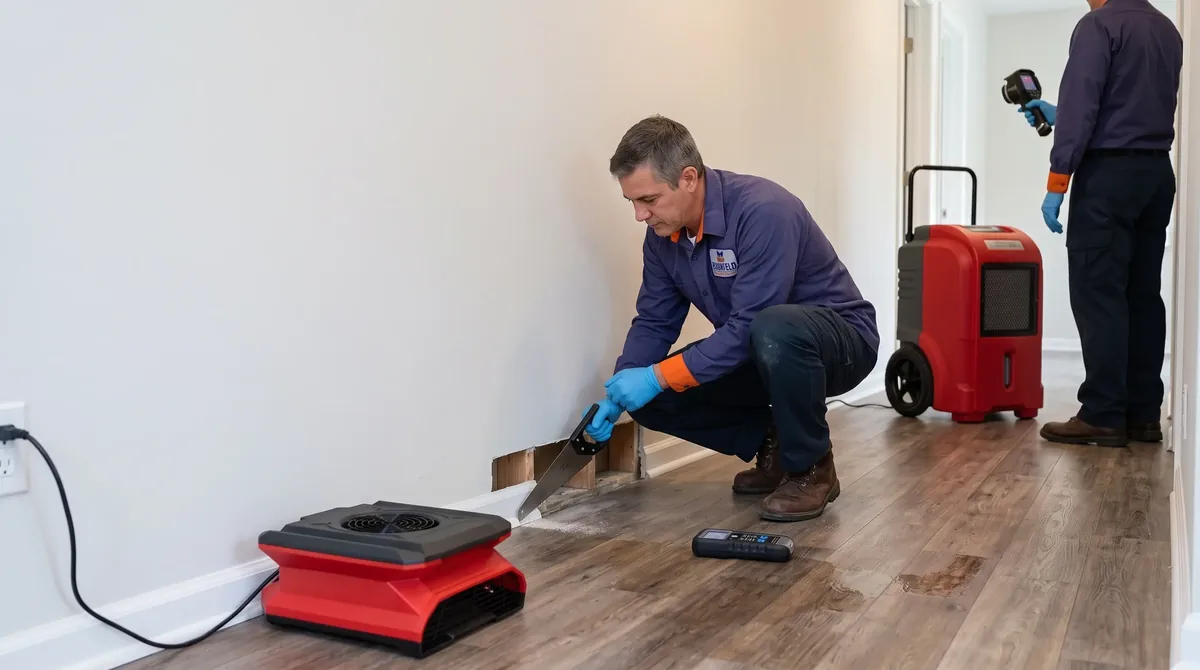
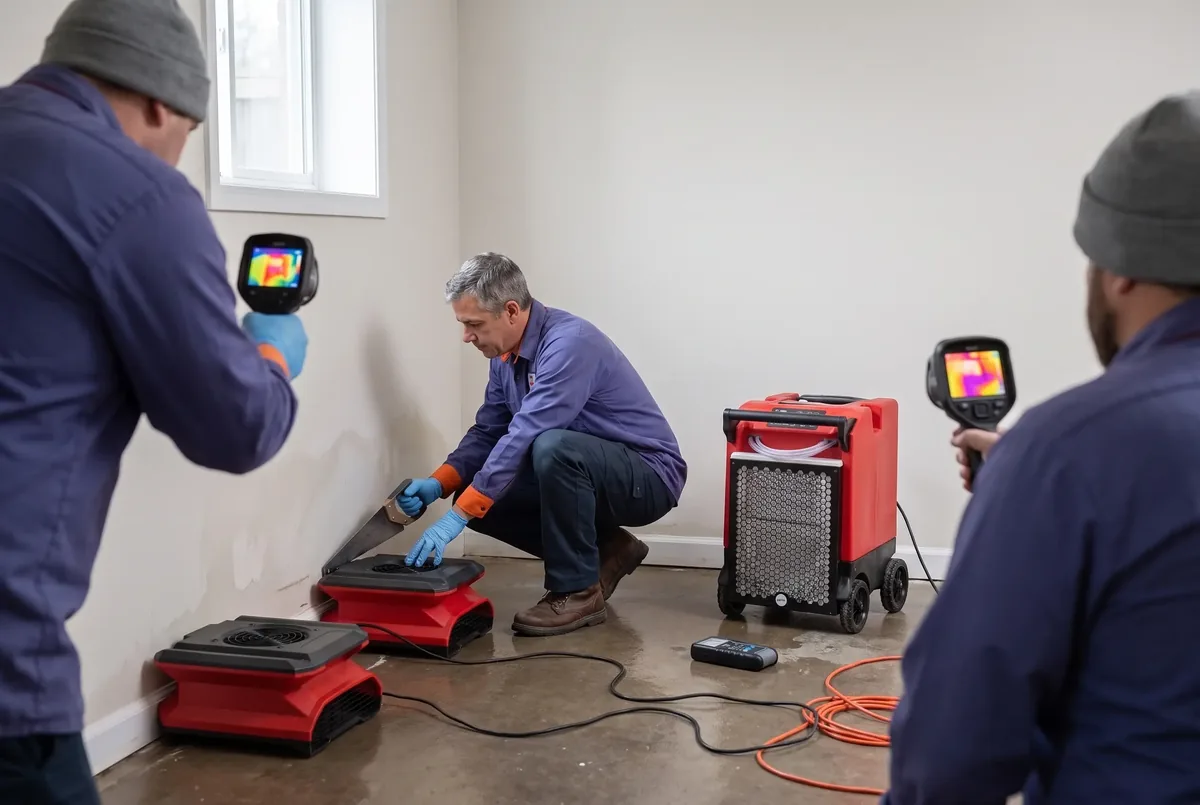
| Protect people first | The crew starts by making the space safe. They test for hazards, look for sewage, and wear boots, gloves, and masks. Residents and pets stay away until the lead says the area is clear. |
| Sort and seal off | Staff judge whether the flood holds clean supply water, gray household water, or black waste. They close off the work area with plastic walls so germs and odors stay in one place. |
| Pump and vacuum | Pumps handle deep water, and vacuums handle the thin layers left on concrete and carpet. The crew checks under stairs, behind the furnace, and in sump pits to find hidden water. |
| Take out the wet stuff | Carpet, underlay, insulation, and wet drywall that sewage reached get cut out. Workers double-bag the debris, haul it out by a covered path, and keep the cleaned zone separate from the dirty one. |
| Clean, then sanitize | Cleaning removes soil and slime, and the sanitizer treats the leftover film. The crew works through floors, wall studs, and shelves so surfaces that stay in the house are ready for drying. |
| Dry and check | Dehumidifiers and fans push moisture out of the air and materials. Technicians read moisture meters at marked points, adjust the gear, and stop only when the numbers show a normal, dry basement. |
Following Your Request for Help
Once your request goes in, the next step is a site visit. Staff look at the basement, check the building for safety, and talk with you about options. You get a clear explanation of the work and what it involves. Questions are welcome throughout, and the crew will wait for your go-ahead.
Questions people ask us
Can I get sick from sewage in my home?
Yes. Sewage may hold microbes such as bacteria and worms. Illness can follow contact with skin, eyes, or mouth. Do not walk through it barefoot, and do not touch your face. Wash up well and seek medical advice if symptoms appear.
What does insurance do about sewer backup?
Results vary by policy. Some plans cover it only with an added endorsement, and limits can apply. Pull out your policy, then ask your agent which parts apply to you. Do not assume anything until you hear it from the carrier.
Which call comes ahead: the utility line, or a cleanup crew?
Call both. The utility looks at its own sewer main. A cleanup crew protects your home and starts removing contaminated water. Tell each one what you see, so they can plan their work and bring the right tools.
Is it safe to do the cleanup myself?
Sewage calls for a pro. Contaminated water needs protective gear, safe disposal, and thorough sanitizing. Mistakes can spread germs to clean rooms. If you cannot tell the water type, treat it as sewage and wait for help.
How do homeowners avoid this in the future?
Common fixes include a check valve on the sewer line, spare power so the sump pump keeps running, root control, and better grading. A licensed plumber can tell you which of these suit your house and your pipes.
Bloomfield Township and sewer backups: what is documented?
The township runs a Water and Sewer Maintenance operation. It buys drinking water from the Southeast Oakland County Water Authority and sends sanitary sewage on to the Great Lakes Water Authority treatment plant.
Found water in your Bloomfield Township basement?
Call (947) 837-7566, 24/7.
Count on a typical Bloomfield Township response in under 30 minutes. One call starts the clock, and a crew is dispatched before you have found your shoes.
Every visit starts with a free estimate.
The job is covered by our written guarantee, which gets a crew back out, not a check.